How many of you who are going to be doctors are willing to spend your days in Ghana? Technicians or engineers, how any of you are willing to work in the Foreign Service and spend your lives traveling around the world? On your willingness to do that, not merely to serve one year or two years in the service, but on your willingness to contribute part of your life o this country, I think will depend the answer whether a free society can complete. I think it can! And I think Americans are willing to contribute. But the effort must be far greater than we have ever made in the past.

-John F. Kennedy

Saturday, April 26, 2014

Camp Pictures

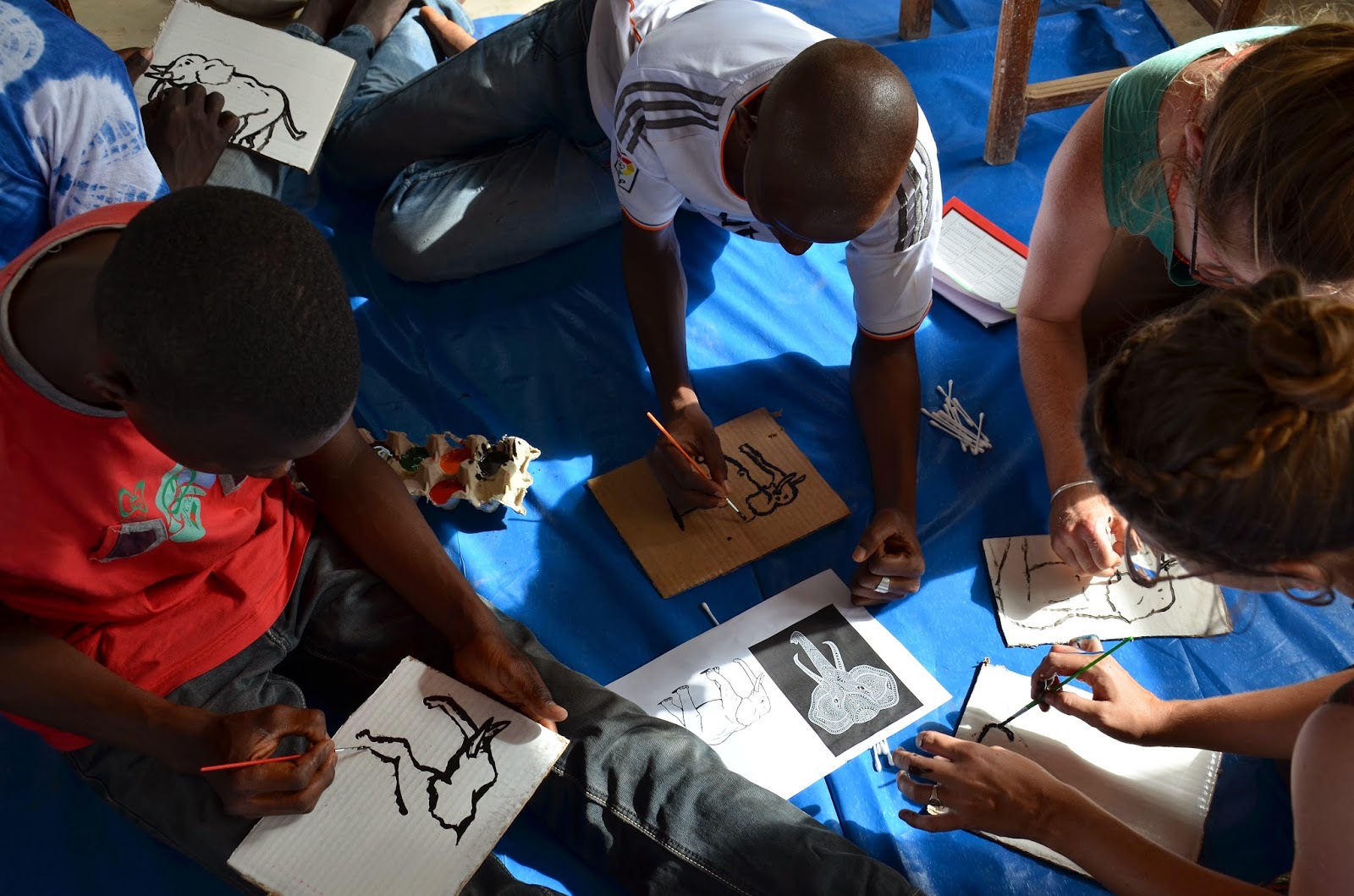
I could write a book about how much I loved camp, and I probably write a pretty lengthy blog at some point, but for now here are some wonderful pictures! Enjoy!


Friday, April 25, 2014

How to Deal with Utter Failure

So we're going to talk about something uncomfortable, embarrassing, and something people don't necessarily like to talk about, especially when it come to themselves: failure.  It's taken me a while to write this post for the reasons listed above, but I feel more comfortable talking about it now, and I think it's because I've finally got a plan.While I've experience more failure and below averageness in the past year than I experienced in the first 22 years of my life, it hasn't hit me as hard as I thought it would.

We'll start with the less embarrassing of the two anecdotes:

 At camp I was in charge of organizing the First Aid session.  No problem, I've been a lifeguard for years; I'm literally a professional.  Give me a First Aid guide and we're all set. Done. We'll just write it out, give it to the local nurse (who should know this stuff) and everything will be just peachy.
Problem 1: I don't speak French. Problem 2: She lives 30km away and I'm really busy. Problem 3: Advising people to call 911 and seek medical attention ASAP is just not realistic. Nor do I want to teach anything super heavy like CPR or setting a bone.

First Aid with the Community Health Worker
 Problem 4 arrived on the day of.  The nurse who was supposed to come was really sick, bedridden with an IV, and couldn't make it.  We managed to get another health worker to agree to come.  The session was due to begin, and she was no where in sight.  We had a schedule, even if this is Senegal, so I thought it'd be a great idea to start the session.  Problem 5 arose fairly quickly after that: no one knew what I was talking about.  Apparently the difference between heat cramps, heat exhaustion, and heat stroke do not translate.  We got through the Heimlich maneuver and heat illnesses before I gave up and had my French speaking toubabs try.  Around this time our health worker friend arrived; a woman had gone into labor and she had been busy doing her job.  How can you be mad at that?  So she picked up where we left off and even backtracked a little to cover stuff that wasn't exactly working when we did it.

I felt like a failure.  Why was I not more prepared? Why didn't I review my language skills beforehand?  Why was I not more energetic, engaging, connecting? Did the kids even care?  I spent the rest of the afternoon in a funk, kicking myself over and over again.

The upside of this failure is that is wasn't a complete failure.  Every night we did small group debriefs.  What did you like today, and what didn't you like?  Did you learn anything interesting and new, or was the day a wash and you were totally bored?

"I really liked First Aid today," piped up one kid.

I looked at him like he had 3 heads and a tail. "Really? Why?"

He then recited everything we had gone over that day, which was awesome because that meant he was actually paying attention, and shared a personal story.  "Now I know how to take care of myself." He pulled up his pant legs to show his shins.  "You see all of these scars?  Whenever I had a wound before, I would put dirt in them because I thought that would make them heal more quickly.  Now I know that is not good, and I should wash with soap and water until it heals."

Putting dirt in his wounds aside, this made me feel really great.  Even though it wasn't me responsible for making the kids understand, it meant the session wasn't a total failure: the kids had learned something. The rest of the kids piped up too, regurgitating information and sharing more stories, chipping away the big block of embarrassment in my chest.

It only got better from there.  Theatre, a terrifying and life ruining pastime in American schools, is a beloved pastime and wonderful teaching tool in Senegal.  For one of our last sessions we split up into our small groups and each picked a topic the camp had covered and prepared a skit.

WHAT?
 The first skit was about a family who didn't want their daughter to learn and gave their ungrateful son everything.  There was an intervention, and eventually the father decided to send her as well.  Flash forward a couple years, and the son is a soccer player and the daughter is a doctor.  The children come home to see their parents, and suddenly their father is choking on a fish bone.  The son watches in shock, knowing his father is going to die.  The daughter, however, springs to her feet and performs................ THE HEIMLICH MANEUVER. WHAT? I laughed so hard.  So the moral of this anecdote is that doctors are more useful than soccer players and even when you think you fail you can still get your message across.

Now comes the harder part.  My garden is dead.  While I was away at camp, the teachers were away on vacation as well, and the students became lackadaisical with tending the garden.  One day someone left the gate open.  A donkey got in and ate it all. All of it.

It's been difficult to deal with.  There's no coming back from that.  If it's dead it's dead.  They will not get any food from this garden this year.  After a month of mulling it over, avoiding the topic, and eventually coming to terms with everything, we've got a plan.  The garden may have died this year, but it will be a more sustainable project in years to come.  Instead of putting it under school authority, we will be transferring most control to two community members.  They will be nominated by their respective chiefs, and make sure the children are maintaining the garden properly.  In return for their service they will be awarded plots in the garden for personal use.

Will this work? I think it will, but in reality I can only have faith, and say, Inshallah.


Jam tan,
Kim

Happy World Malaria Day! Show me ya SKILLZ.

Happy World Malaria Day! For those of you not in the Peace Corps circle, World Malaria Day is a day for people from all over the world to get together and share experiences, ideas, and projects they've been doing to help stop the spread of malaria.

For those of you who aren't religious readers, malaria is a parasitic disease spread by the pregnant female anopheles mosquito.  It is spread mostly at night, hence the promotion of insecticide treated mosquito nets.   I'll just summarize the most important part by saying that malaria is easily the biggest killer in Africa (yes, even over HIV/AIDS!) and the most common victims are children ages 0-5.

So how did I spend my World Malaria Day?  Inspired from my recent training with Grassroots Soccer, an organization that uses soccer to get out key messages on HIV/AIDS, women's health and rights, and, (you guessed it!) malaria, and brought the malaria curriculum to my primary school.

Grassroots is amazing for a lot of reasons, but one of my favorite things about it is the focus it places on encouragement.  Aside from snapping to show agreement, there's also something called a kilo.  This is busted out anytime someone has done or said something super amazing.  The most basic one is clapping three times on your left, three times on your right, then shouting "WOO" and pointing at the person you want to congratulate.  There are also more advanced ones,my favorite one being the Obama kilo ("YES WE CAN.")  Encouragement can sometimes be lacking, and I think it's great to have something like this incorporated in the program.  The teacher helping me out even got into it by the end!

The lesson today was focused on making the children aware that malaria is the number one killer in Africa, that anyone with a fever should go to the health post immediately, and that the best way to protect themselves is to sleep under a mosquito net every night, all year.  The core of the lesson involved a game called Bed Net Ball.  We split the kids into two groups and gave them each  a sheet and a soccer ball.  They had to throw the ball into the air, using the sheet to catch it, using communication to make sure the timing was on. We paused, read some "key messages" and resumed with a twist: the sheet represents a mosquito net, and the ball represents a mosquito.  The whole team has to throw the mosquito into the air and quickly get under the sheet before the mosquito hits the ground.  If they're not under the sheet, they're infected with malaria.  I played the health worker, and anyone who didn't make it had to run over to me and give me a high five- this represents quickly seeking treatment.

We ended with a bed net demonstration, which I made one of the girls do by herself.  She did a wonderful job and we all gave her a kilo.

We sat down with the kids afterwards.  "What did we talk about today?"
"Mosquitoes! ""Nets!"
"What about them?"... cue really long explanation on how to take care of a net and how nets stop mosquitoes.
"What else?"
"Going to the hospital!"
"Why?"
"Because if you go quickly it keeps the disease from getting really serious and painful." Perfect.

It was a really encouraging start to what I hope will be a long partnership with Grassroots Soccer (check out grassrootssoccer.org for more information).  I'll be doing three more lessons with this class, and other teachers seemed interested, so we'll see what the future holds! In the meantime, if you'd like to see what you can do to STOMP OUT MALARIA check out our website at stompingoutmalaria.org and keep reading!


(No pictures today due to lack of AA batteries, but inshallah next week I will be able to post some!)

Jam tan,
Kim


Tuesday, March 18, 2014

How to get a mini-me

Dear Aissatou Sadio Diallo,
Welcome to the world!
Love, your tokora

As I've mentioned throughout my blog, Senegalese people are named after family members or close family friends.  While this keeps the variety of names to an unheard of low level, it's pretty exciting to have a baby named after you.  All of the kid in my compound are named after sisters or brothers of my baaba or neene, except Yaya, who is named after his paternal grandfather, and the newest addition to our family, Aissatou Saio, who is named after me!

Oumou with Moutarou and Aissatou
Let me give full disclosure here:  I was dying for this baby to be a girl, and I was dying for it to be named after me.  I'm named after my baaba's neene, who died about six months before I got site. My CBT tokora and I were absolute besties- both of us felt like we owned the other one a little bit.  It's something that I really loved about Senegal during my training and it's something I've really missed since tainin ended.  I've just been floating along, tokara-less, owning no one and no one owning me.


UNTIL NOW.

In an utterly shameless fashion, I've been dropping hints that this baby (who was always a girl in my mind) should be named after me.  "Oumou, I saw this kilo of bananas in the market and just thought of you!"  "Omar, here's some extra tea, you've been working SO hard!" "After the baby is born, I'll carry her on my back all the time!" "Neene, tell them to name her after me."

Finesse is overrated.

Me and my tokora at her denabo
Aissatou was born February 23, 2014  to Omar Diallo and Oumou Keita.  She has an older brother, Moutarou, age three, who doesn't really like her since she stole his mom.  she's beautiful, if small.
When any baby is born, the parents sit around and dream about the little weird-looking pile of skin's future.  As a part-owner of Aissatou, I've been thinking about her future a lot.  Will I see her learn to walk and talk?  Will she go to school? For how long? When will she get married?  Will she have a choice in the matter?  What can I do to make sure this little girl has everything that should be available actually available to her?  What kind of role can I take in her life when I come home, or will she just forget me?

I don't have a lot of answers.  The way things are run right now, I think she will go to school.  For how long, I don't know.  Neither of her parents learned for very long, and her mother got married at 15.  I want to believe things will have changed so much in fifteen years that that will not be an expectation for the precious Aissatou, and I have a new motivation to create these discussions.

Monday, March 17, 2014

Roadtripping with the Counterparts

The Peace Corps recently offered a 3 day nutrition training to PCVs in Tamba, Kedougou, and Kolda regions, and the best part was that we got to bring our counterparts.  The point was to link nutrition and agriculture, two of the most important aspects of food security.  I brought my community counterpart, Moussa, who is a farmer, part owner of a cashew transformation business, and a new relais; and Fatou, our village's longstanding relais.

During the training volunteers and counterparts were split up, since volunteers had already received most of the training during PST or IST.  this was counterparts could go into detail (in Wolof) while not having to worry about translating for their volunteers, and volunteers could quickly and easily discuss the issues relevant to their communities. The training was an overall success.  Moussa and Fatou said they learned a lot, and they each got a nutrition handbook they can keep until the end of time.
At the end of training the three of us made an action plan- what could we do in village with this new bounty of knowledge?  So far Moussa and I have done a complet talk and neighboring Sare Hamidou with our good friend Hoyo, and Fatou joined us for a talk in Sanankoro.

We talked about basic nutrition for everyone.  There are so many different guidelines for how to feed different age groups (especially pregnant and nursing women and children under 5) but we decided to stay general for our first health talk.  What exactly does gnutrition mean? Why do we need to eat healthy? What are we doing not to ensure we have access to nutritious meals, and what can we change?


To drive the point home and give a concrete example of what makes a good meal, we used the complet model.  This sis a Senegal-specific example using traditional Senegalese dress.  he tikka, or headwrap, represents this foods that makes you smart- fruits and vegetables; the shirt represents things that make you strong- fish, peanuts, eggs, meat, beans; and the skirt represents foods that give you energy- corn, rice millet, bread.  We had the women place drawn pictures of food on the complet based on how its nutritional content affects your body.  They got it, but there was a big discussion on whether it's feasible or not, because of money or seasonal availability.

This will be an ongoing project.  we'll conduct home visits with the women to make sure they understood our message, and take the opportunity to talk to their husbands as well.  Inshallah, this will be a onthly event, so look forward to similar posts!

Stomping Out Malaria Bootcamp

I was recently given the wonderful opportunity to attend the 9th Stomp Out Malaria Boot Camp in Theis.  Theis? What's so special about that, you go there all the time.  Sure, but what made this time so cool was that this event was Pan-African. Thirty-six other volunteers and Peace Corps employees from 18 different countries all around Africa came together to have an intense and in depth discussion on something that has plagued all of our communities: malaria.

Where does malaria come from? Who is most at risk? What are some of the best practices we has health workers can bring back to our communities? Is there an end in site?  During the 10 day training with 12 hour days, we delved deeper into these topics than I ever have before.  We got to Skype with leading professionals in their fields, see a community that had essentially eradicated malaria (gasp, it can be done!), visit an entomology lab that breeds and tests mosquitoes in order to stay up to date on how effective the preventative measures we use are, and share cross-country tactics we can use in our own communities.

In Africa malaria is an endemic disease, with 85% of malaria cases and 90% of deaths worldwide.  The most at risk groups are pregnant women and children under 5 (85% of malaria deaths are children under 5).  Malaria initiatives are very focused on these groups- in Senegal pregnant women receive free nets and malaria prophylaxis at their pre-natal visits, and children under 10 can receive free malaria treatment at a health post.  Senegal has been doing some really innovative work in order to reach pre-elimination stage.

Although pregnant women and children are the most susceptible, pre-elimination is not possible by targeting them alone.  Senegal is in their second wave of universal bed net distributions.  Many countries do not do free, universal coverage campaigns.  They tend to offer subsidized nets or free nets to at-risk groups.  But Senegal found they weren't getting the results they wanted, and are now doing another round of universal distribution.

Senegal also has the PECADOM program, and is scaling up a new and improved PECADOM Plus program.  The PECADOM program places a community health worker, called a DS-DOM, in a rural location (where the population is farther from health facilities and therefore more likely to die) with a backpack full of anti-malarial drugs.  These drugs are free, and anyone can come to this worker at any time to receive treatment.  The PECADOM Plus program, however, takes this model and changes it from a passive to an active treatment.  In the Plus program, community health workers do sweeps of their catchement and actively look for cases of malaria.  Statistics show this model is more effective and saves more lives, and Senegal is hoping to expand the program from Kedougou to Kolda and Tambacounda as well.

But the awesome thing about this training was that it wasn't all about Senegal.  Sure, Senegal is doing some really awesome things, but so are other countries.  I learned that co-infection of AIDS and malaria is a huge problem in East Africa.  I learned that they're making a vaccination that should wipe out the disease, but even though there's that light at the end of the tunnel, we can't stop trying to stomp out malaria because there are millions of people between then and now that could die.


But this camp was more than just malaria related. It was also the perfect opportunity to share our adopted cultures and discover how similar our experiences are despite geographical differences.  There was some volunteer to volunteer competition: You think your hut is tiny? You think that's a bad giardia experience? You think 14 hours is a long car ride? Well, let me tell you...

And that bonding experience is important.  Knowing that every Peace Corps Volunteer faces the same day to day challenges, no matter the culture, or living situation or country, is extremely comforting.  When I meet another Peace Corps Volunteer, I know that I can have an engaging, exclusive, culturally stimulating conversation, and they'll get it.  And that led me to something that I really needed: a renewed sense of purpose.  A lot of time volunteers can feel overwhelmed with the amount of options we have for work, or feel lost in a larger purpose.  Malaria kills 500,000 people a year, what can I do in my village of 450 people to have any impact on that number?


Garden

     Back in December, I shamelessly solicited you all for money so I could build a school garden in my primary school. Thank you to those who donated. I'm overwhelmed by the amount of support I receive both emotionally and financially (for projects!) from all of you at home, so thank you all.

     The garden was constructed and planted by early February.  Teachers, kids and community members alike are excited.  I can't tell you how many times a day I'm asked how my garden is and how the plants are doing.  "Jam tan," I tell them, "but it's YOUR garden!"

     On top of that, they also tell me when things aren't going well!  Full disclosure, I've been insanely busy these past couple of months, ad only made it out to the garden a couple of times a week to check and see that everything wasn't dead.  I'm also not a gardening expert, and while I've had some training and own a manual, there's a lot you can't learn from a book.  So my neene told me the lettuce didn't look good, and sure enough, the sun was burning it all; I talked to the teachers in charge, Monsieur Kande, and we're getting some shade.  Organization also needed to be readdressed- the kids are the ones taking care of the garden, but a lot of them don't know what they they don't always know what they're doing.

     To remedy this, I brought in Sustainable Agriculture PCV Brad Berry, to the the kids a better idea of how to take care of a garden.With the help of Monsieur Kande, we used a question and answer format to discuss how to properly water beds, mulch, space plants, and maintain plant nurseries.  For practice, we thinned the carrot nursery.  Next time, inshallah, we're going to transplant the onion nursery and learn how to properly prepare a bed with all of the amendments.

     I love this project because it covers several different areas.  Aside from the physical benefits (VEGETABLES) and giving the children a project of their own (instead of making them do all of the work and reap none of the benefits), several volunteers and I are going to be doing regular classes on nutrition, gardening, and trees.  I think it's really powerful when a bunch of adults give children this much attention, especially here.  School is a lot of memorization, and these activities can give kids a reason to get excited to love school!


Brad and me with our training group